Little League elbow: How to protect young pitchers

Posted: September 25, 2026
Baseball season is something many players and families look forward to, offering opportunities for skill development, teamwork and fun.
Yet, young players can find their season cut short due to Little League elbow, an injury that affects growing athletes.
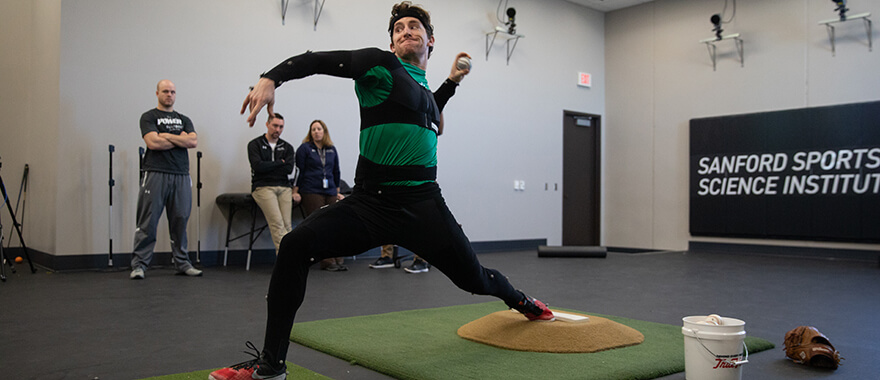
Physical therapy experts at Sanford Sports in Sioux Falls hope to help keep young arms healthy all season long by educating on the causes of Little League elbow, teaching prevention strategies and sharing treatment options.
What is Little League elbow?
Little League elbow is an overuse injury that causes pain in a young athlete’s throwing elbow. It occurs when repeated throwing stresses the elbow growth plate on the inside of the elbow. Children are especially vulnerable to this injury because their growth plate is weaker than the surrounding muscles and ligaments.
Over time, stress on the growth plate can lead to pain, inflammation and in severe cases, small fractures.
Little League elbow is sometimes referred to as pitcher's elbow because it most commonly affects young pitchers. But anyone who throws a lot, including catchers, infielders and outfielders, can be affected.
The condition develops over time
Little League elbow rarely develops from a single throw. Instead, it occurs when the throwing motion is repeated over time.
The first sign is often elbow pain during or after throwing.
Contributing factors can include:
- Continuing to throw despite elbow pain
- Not getting enough rest between games or seasons
- Playing on multiple teams at the same time that involve throwing
- Poor throwing mechanics
- Throwing too often or pitching too many innings
- Weakness in the shoulder, core or hips
When an athlete becomes fatigued, more stress is placed on the elbow, increasing the risk of growth plate injury.
Physical therapy can help prevent injury
Physical therapists focus on preventing injury before it starts. Rather than focusing only on the elbow, physical therapists address the entire throwing system, known as the kinetic chain.
Key prevention tips include:
- Avoiding breaking pitches until age-appropriate
- Using proper throwing mechanics, including strong leg drive and a stable core to help reduce stress on the elbow
- Following pitch count and rest guidelines
- Maintaining normal shoulder range of motion
- Strengthening the shoulder, scapula, core and hips
Coaches are also encouraged to teach athletes to report soreness early and not push through pain.
Little League elbow treatment and recovery
Athletes diagnosed with Little League elbow should stop all throwing activities while the injury heals. Early treatment leads to the best outcomes.
Most cases of Little League elbow are treated without surgery. Rest is essential to allow the injured growth plate to heal. Ice or cold packs and over-the-counter pain relievers may also help manage pain and inflammation.
Following treatment, athletes are encouraged to gradually strengthen their arm, shoulder and core and work on proper throwing movement and mechanics.
They should also work with their physical therapist and coach on a return-to-throwing program. The program should:
- Gradually increase throwing volume and intensity
- Provide pitch count guidelines
- Specify appropriate throwing distances at each stage of recovery
Most athletes return to baseball safely within 8 to 12 weeks when treatment is followed correctly and they do not have any elbow pain, have full strength in their arm and can bend and straighten their elbow fully.
The bottom line? Common, but preventable
With proper rest, smart training and early physical therapy involvement, young athletes can stay healthy and continue playing the sport they love.
Young athletes should take a break from overhead throwing for three to six months each year. During that time, consider participating in sports that don't involve repetitive throwing, such as soccer or swimming. When returning to baseball, proper throwing mechanics remain important for preventing injury.
If your child experiences elbow pain, decreased throwing performance or difficulty throwing, seek an evaluation early. Prompt treatment can help prevent long-term injury and support a safe return to play.